
5 Categories of Leads and How to Sell to Them
SUBSCRIBE TO THE BUSINESS LOVE LETTERS HERE FOR FREE
Join thousands of readers who get practical tools, insights, and updates to grow every week.
We HATE spam. Your email address is 100% secure
Not All Leads Are Created Equal (And Most People Are Chasing the Wrong Ones)

Believe it or not, I did digital marketing for three whole years before I even knew what a lead was. (To be fair, I started when I was 17 and just wanted to make money 😅).
I knew businesses needed customers, but “lead”? That word wasn’t even in my dictionary.
I was just out here running ads, posting content, and hoping for alerts to enter. But the more I grew, the more I realized that marketing actually revolves around leads.
They’re the backbone of any business. If you understand leads, you understand how money moves.
So today, let’s break it down — what a lead really is, the different types you’ll come across, and how they can either make or break your business.
What Is a Lead?
A lead is simply a signal of interest. That’s it. It’s someone who shows curiosity about a problem you solve or a solution you provide.
Every business exists to solve problems.
People will always have problems — and leads are the ones raising their hands saying, “I might need your help.”
The more leads you generate, the more problems you solve. And the more problems you solve, the more alerts you’ll hear 💸.
Types of leads
Here’s where a lot of marketers and business owners get it wrong — not all leads are the same.
Treating them like they are is like trying to propose marriage on a first date. Super awkward.
We classify leads based on a few key things. And once you know which category someone falls into, you’ll know exactly how to speak to them, follow up, and convert them.
1. By Stage in the Funnel
Cold Leads → These ones just stumbled into your world.
Maybe they saw your ad, clicked follow on Instagram, or signed up for a free class.
They don’t really care yet — they’re just vibing and watching.
Example: Someone follows a fitness coach but hasn’t tried any workouts.

Warm Leads → They’ve started interacting — asking questions, joining webinars, replying to your stories.
They’re interested but still forming opinions.
Nigerian business owners hate this category 😭 — especially the
“How much?” people that ghost afterwards.
Example: A salon client keeps asking about hair treatments but hasn’t booked.
Hot Leads → These are the money-in-hand people, Odogwu people.
They’re asking for your prices, clicking your offer page, or booking a demo.
They’re ready to buy sharp sharp.
Example: A business owner who fills out a photographer’s contact form requesting wedding packages.
How to treat them: Cold leads need nurturing. Warm leads need education and trust. Hot leads need you to close confidently.
2. By Source
Organic Leads → People who found you naturally — through content, SEO, or word of mouth.
They’re the sweetest because they chose you, but they’re also the hardest to get.
Example: Someone who discovered a restaurant via Google reviews and called to make a reservation.
Paid Leads → Those who came in through ads. You know those instagram or facebook ads you see, yeah.
Example: A shopper who clicks on a boutique’s Instagram ad and joins the mailing list.
Referral Leads → Brought in by happy customers or trusted partners.
These are the easiest people to sell to. I find that a lot of them pay without asking too many questions.
Example: A lawyer gets a new client through an old client’s recommendation.
Event/Influencer Leads → Captured from webinars, expos, influencer shout-outs, or live classes.
A large base of my community was built with influencer marketing.
One of the best ways to generate leads because the leads are usually warm and tend to trust you a lot more than the cold leads generated by paid ads.
Example: A skincare brand gets new sign-ups after an influencer shares their product during an Instagram Live.

Pro tip: Never rely on one source. Build a mix — but prioritize the ones that come with built-in trust (referrals, influencer shoutouts, etc.).
3. By Fit & Quality
Marketing Qualified Lead (MQL) → Someone who matches your target audience and has engaged with your business (maybe they downloaded a lead magnet or joined your email list).
It is usually easier to sell to these leads because you are sure they may have a problem you can solve for them
Example: A freelancer who grabs a “Free LinkedIn Optimization Guide” from a career coach’s website.
Sales Qualified Lead (SQL) → A step further than MQL. They fit your ideal customer profile and are ready for a sales conversation — like asking for a call or replying on WhatsApp.
If you say the right words to these people, they are most likely to buy.
They want you to sell to them.
Example: A corporate HR manager who requests a proposal from a training consultant.

Product Qualified Lead (PQL) → Someone who has tried your free trial, starter package, or entry offer and is very likely to upgrade to a full product or service.
These are my favorite type of leads, because they are aware of the value you bring and can’t wait to experience the full range of what you have to offer.
Example: A gym visitor who used a free 7-day pass and now wants to sign up for a monthly membership.
Pro tip: Guide them step-by-step — from MQL ➝ SQL ➝ PQL. That’s where the real sales happen.
4. By Value Potential
Low-Value Leads → Might only purchase once, and usually at a low price point.
Don’t judge these types of leads. Usually, most people start at this point.
If you deliver they slowly become regulars and they keep buying.
Example: A café customer who pops in once for coffee during a promo but doesn’t return.
Mid-Value Leads → More consistent. They’ll buy from you more than once but probably won’t go for your biggest offers.
Usually, it may be because they can’t afford it or they simply don’t think it is necessary.
Example: A photography client who books annual family shoots but never splurges on premium packages.
High-Value Leads → Your dream clients. They’re loyal, spend big, and often bring in referrals because they love what you do.
Yeah another favorite of mine because who doesn’t love referrals. These are the type of leads you shower with extra attention.
Example: A corporate client who hires a caterer for every event and recommends them to other businesses.

Pro tip: Treat every lead well — but nurture high-value ones like royalty.
5. By Awareness Level
Completely Unaware→ These are people who don’t know they have a problem yet.
Life feels normal to them, and they are not actively searching for any solution.
There are so many people like this, and the more you can reach these people and convert them, the more money you can make.
Example: Someone who feels constantly tired but doesn’t realize their lifestyle choices are the cause.

Problem Aware→ At this stage, people realize they have a problem but don’t yet know what the solution looks like.
They can identify the pain, but they don’t know what to do about it.
They are usually looking for a solution and if you position yourself well online, you can be that solution.
Example: A business owner who knows they are struggling to get customers but doesn’t know if the issue is marketing, sales, or branding.
Solution Aware→ Here, people understand that solutions exist, but they are not sure which one is best for them.
They are exploring their options. These people are easier to sell to than the first two.
Example: A young professional who knows they need financial guidance but is unsure whether to take a course, hire a coach, or download free resources.
Product Aware→ At this level, people know about your product or service, but they still need a little convincing.
They’re aware of you but haven’t fully decided.
Besides the fact that they may not trust you yet, they may also be comparing you to other people and wondering if you are the best person to choose.
Example: A bride-to-be who has already checked out a particular photographer’s portfolio but isn’t sure whether to book yet.
Most Aware→ These are the people who already trust you and your product.
They just need the right reason or timing to go ahead and buy.
There are usually fewer people here but if you are good at sales closing, this is where you actually make money.
Example: A gym enthusiast who follows a trainer online, loves their style, and is only waiting for the trainer to announce a discount or special package before signing up.
Pro tip: Your content and messaging should match where people are in their awareness journey. Don’t pitch a premium offer to someone who doesn’t even know they have a problem yet.
Final Thoughts
Understanding the different types of leads is like having a cheat code for sales.
Once you know who you’re talking to and where they are in their journey, you’ll stop wasting energy — and start printing money.
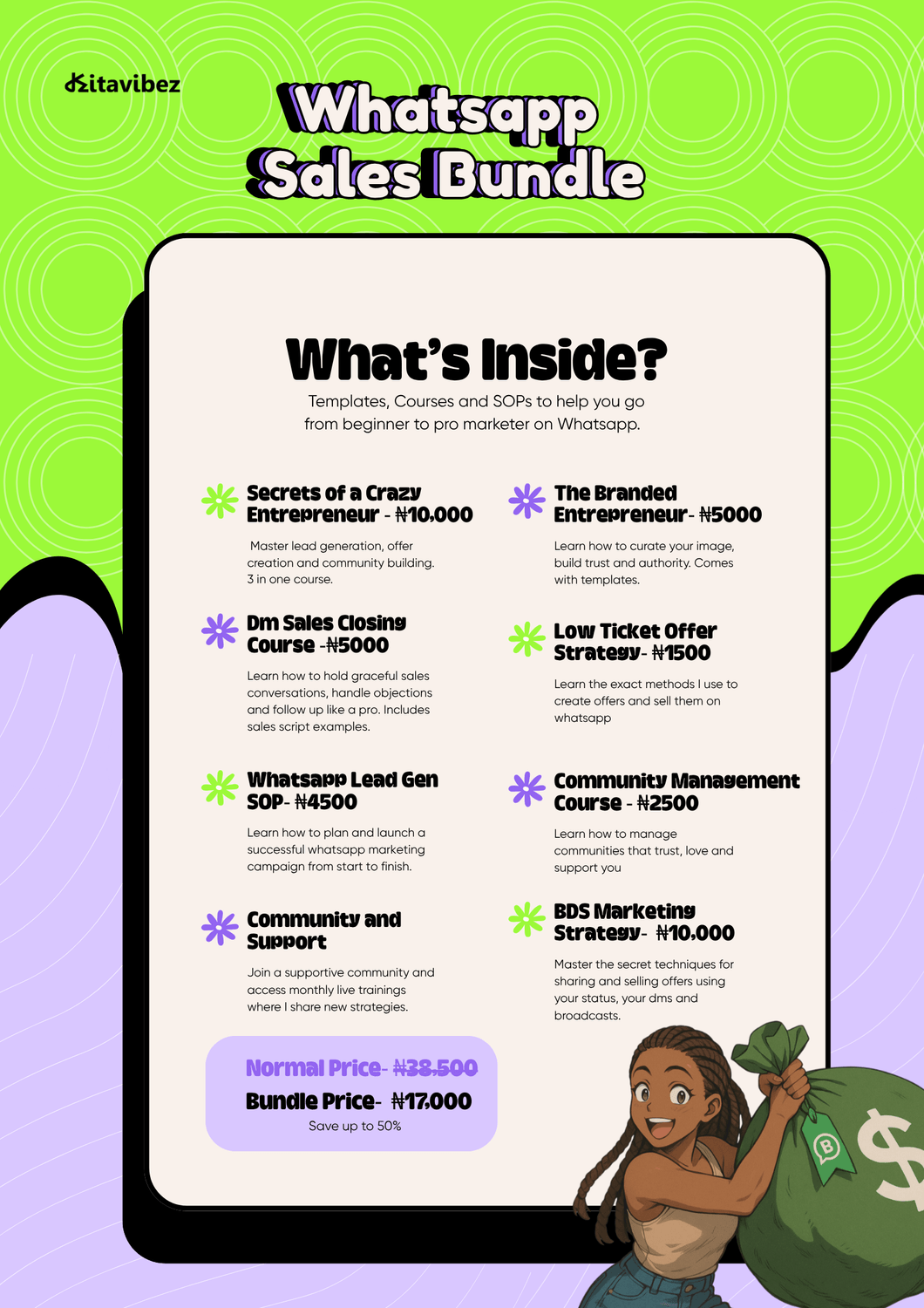
And if you want to dive deeper into all of this — how to attract the right leads, convert them, and make them loyal to your brand — I’ve built a practical WhatsApp marketing course just for beginner marketers and business owners. We go into all this and more.

HEY, HEY, HEY, I'M KITA
I’m an author, coach, and founder of Kitarific, a digital marketing agency. I’ve built an 8-figure freelance and digital business while helping thousands of freelancers do the same. Here, I share the strategies that turn skills into income — so you can stop undercharging and start earning what you’re worth.
